
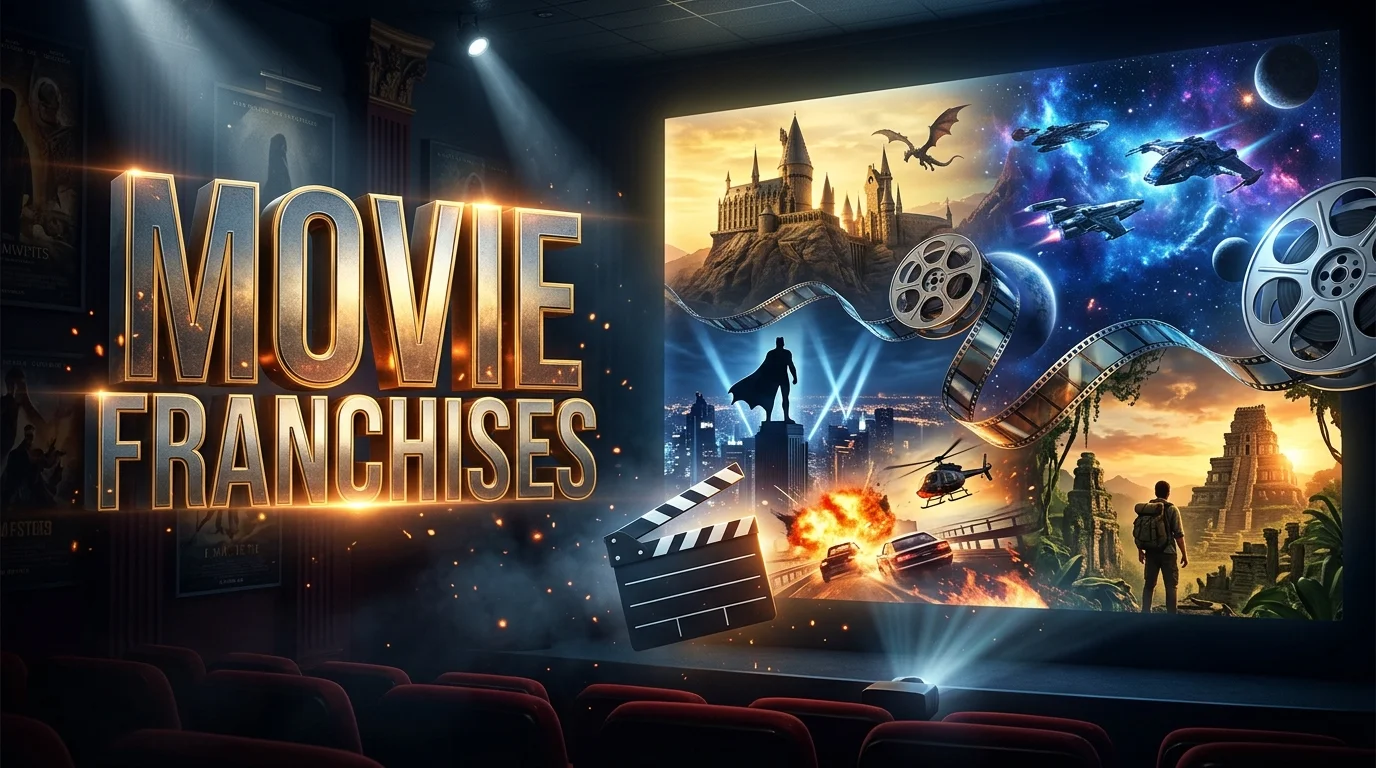
Movie franchises have shaped American audiences’ experience of blockbuster cinema for decades. They turn successful stories into continuing worlds with familiar characters and recurring themes. The strongest examples survive changing actors, directors, technology, and audience expectations.
Some series dominate theaters for years, while others build their reputation through consistent quality. A great franchise needs more than sequels carrying a recognizable logo. It needs characters, stories, or worlds that viewers still want to revisit.
Direct answer: A movie franchise is a group of connected films built around shared characters, stories, settings, or intellectual property. Successful examples can expand through sequels, prequels, spin-offs, television, games, merchandise, or theme-park attractions. The strongest series combine recognizable identities with enough creative flexibility to stay interesting.
Quick Guide to Major Film Series
| Series | Starting point | Main genre | Why it stands out |
|---|---|---|---|
| James Bond | Dr. No | Spy/action | Decades of reinvention |
| Star Wars | Star Wars | Science fiction | Vast shared universe |
| Rocky | Rocky | Sports drama | Character-driven longevity |
| Indiana Jones | Raiders of the Lost Ark | Adventure | Classic action storytelling |
| Jurassic Park | Jurassic Park | Science fiction | Dinosaurs and spectacle |
| Toy Story | Toy Story | Animation | Emotional consistency |
| Mission: Impossible | Mission: Impossible | Action | Practical stunt spectacle |
| Harry Potter | Sorcerer’s Stone | Fantasy | One connected coming-of-age story |
| The Lord of the Rings | The Fellowship of the Ring | Fantasy | Large-scale world-building |
| Marvel Cinematic Universe | Iron Man | Superhero | Interconnected storytelling |
Key Takeaways
- Long-running film series succeed when audiences care about their characters or worlds.
- Sequels work best when they add something rather than repeating the original film.
- Shared universes allow several characters and stories to connect across separate releases.
- Critical reputation, box-office success, and cultural influence do not always produce the same ranking.
- Personal taste still matters when deciding which series deserves the top spot.
What Makes Movie Franchises Last?
Long-running film properties usually have an identity audiences recognize quickly. That identity might come from one hero, one fictional world, or a distinctive storytelling style. Familiarity gives each new installment a foundation without requiring every idea to remain unchanged.
Longevity also requires adaptation because audience expectations change over time. James Bond has changed performers and tones many times while keeping its central spy concept. Other series use new generations of characters to keep an established story moving forward.
15 Movie Franchises Every Film Fan Should Know
1. Star Wars
Star Wars changed blockbuster filmmaking after its 1977 theatrical debut. Its combination of adventure, mythology, technology, and memorable characters created a recognizable fictional universe. Later trilogies and spin-offs expanded that universe far beyond the original story.
Its influence also reaches television, games, publishing, toys, and theme-park attractions. Few entertainment properties have maintained comparable cultural visibility across several generations. That continuing reach makes the saga essential for any discussion about major film series.
2. The Marvel Cinematic Universe
The Marvel Cinematic Universe changed expectations for connected blockbuster storytelling. Individual heroes could lead separate films before meeting within larger crossover events. That structure encouraged audiences to follow several characters across one shared continuity.
The approach also influenced how other studios considered interconnected properties. Its releases cover superhero adventures, science fiction, fantasy, comedy, and political thriller elements. The result is one of Hollywood’s most ambitious experiments in serialized theatrical storytelling.
3. James Bond
James Bond demonstrates how a central character can survive repeated creative reinvention. Different actors have brought distinct personalities to the British secret agent since Dr. No. The surrounding filmmaking style has also changed with each era.
Certain elements still make a Bond film recognizable within minutes. Exotic locations, elaborate action, espionage, gadgets, villains, and signature music remain important ingredients. That balance between tradition and reinvention explains much of the series’ endurance.
4. Harry Potter and the Wizarding World
The original Harry Potter films offered audiences an unusual advantage: the characters visibly grew alongside their performers. Eight films followed Harry, Ron, and Hermione from childhood into an increasingly dangerous conflict. That continuity created an emotional connection that many episodic series cannot match.
The wider Wizarding World later expanded through additional stories and media. Its appeal still depends heavily on Hogwarts, magical traditions, and the original characters’ legacy. Those elements made the property especially influential among fantasy audiences.
5. The Lord of the Rings and Middle-earth
Peter Jackson’s Lord of the Rings trilogy showed that dense fantasy material could become mainstream event cinema. The films combined large battles with intimate character relationships and a clear central quest. They also introduced many viewers to Tolkien’s Middle-earth.
The trilogy remains a major reference point for modern fantasy filmmaking. Clipaper’s Stuart Townsend profile also covers the famous Aragorn casting change before filming progressed. That story offers an interesting look at how major productions can change before audiences see them.
6. Mission: Impossible
The Mission: Impossible films gradually developed one of action cinema’s clearest identities. Espionage plots provide the framework, but elaborate practical stunts became the major attraction. Each release tries to give audiences a memorable physical set piece.
Tom Cruise’s Ethan Hunt also provides continuity across changing directors and supporting characters. The series has adjusted its tone without abandoning tension, teamwork, and dangerous missions. That consistency helped it remain relevant long after many 1990s action properties faded.
7. Toy Story
Toy Story began as a technological milestone but endured because of its characters. Woody, Buzz Lightyear, and their friends face stories about friendship, identity, change, and growing older. Those themes allow younger viewers and adults to connect differently.
Critics and audiences have repeatedly rated the series highly when comparing major franchises. Its strongest installments also show that animated sequels can deepen characters instead of repeating earlier adventures.
8. Jurassic Park and Jurassic World
Steven Spielberg’s original Jurassic Park combined science fiction, suspense, adventure, and groundbreaking visual effects. Its dinosaurs immediately became part of popular culture. Later films returned to the basic idea of humans losing control over prehistoric animals.
The quality of individual installments varies, but the core concept remains exceptionally easy to understand. Dinosaurs provide spectacle before a viewer knows anything about the characters. That simple appeal gives the property unusual staying power.
9. Indiana Jones
Indiana Jones combines old-fashioned adventure serials with modern blockbuster filmmaking. Harrison Ford’s archaeologist travels through dangerous locations while pursuing historically inspired artifacts. Humor and physical vulnerability help distinguish him from invincible action heroes.
The best entries also understand the value of momentum. Chases, puzzles, fights, discoveries, and supernatural threats arrive in carefully controlled sequences. That formula influenced generations of adventure films and games.
10. Rocky and Creed
The Rocky series started with a small personal drama rather than a massive spectacle. Its central appeal came from perseverance, relationships, aging, and personal dignity. Boxing gave those themes a dramatic physical setting.
The later Creed films found a smart way to continue that legacy. They shifted attention toward a younger fighter without erasing Rocky Balboa’s history. That transition shows how an established property can evolve through new protagonists.
11. The Fast and the Furious
The first Fast and Furious film focused heavily on street racing and undercover crime. Later installments grew into large international action adventures. That transformation is one of the clearest examples of a series changing its scale.
Its recurring cast also became central to its identity. Loyalty and chosen family connect stories that otherwise involve increasingly extravagant action. The tonal shift helped the property attract audiences far beyond car enthusiasts.
12. Planet of the Apes
Planet of the Apes has survived because its premise supports reinvention. The original films used science fiction to explore power, identity, prejudice, and human behavior. Later productions returned to those themes with new visual technology.
The modern films also gave the apes greater emotional depth. Caesar became a complex protagonist rather than a simple effects showcase. That character focus helped make the rebooted era more than a technical demonstration.
13. Alien
The Alien property began by combining science fiction with claustrophobic horror. The Xenomorph became one of cinema’s most recognizable creatures. Later installments experimented with action, mythology, survival, and different creative approaches.
That flexibility produced uneven results but also kept the concept alive. The strongest films understand that the creature works best when characters feel vulnerable. Suspense remains more important than simply placing more monsters on screen.
14. The Hunger Games
The Hunger Games brought dystopian young-adult fiction into the center of blockbuster culture. Katniss Everdeen’s story mixes survival, politics, celebrity, propaganda, and rebellion. Jennifer Lawrence’s performance gave the adaptation a strong emotional center.
The films also arrived when studios were searching for major young-adult properties. Several competitors followed, but few matched this series’ cultural visibility. Its political themes gave audiences more to discuss beyond its central competition.
15. John Wick
John Wick became influential through precise action choreography and unusually detailed world-building. The first film begins with a relatively simple revenge story. Later entries reveal a larger society of assassins, rules, hotels, alliances, and consequences.
Its visual style also helped renew interest in carefully staged action. Long takes and readable choreography often let viewers understand where characters stand during fights. The series proves that a familiar genre can feel fresh through disciplined execution.
Which Series Should You Watch First?
Your best starting point depends on the experience you want. Choose Star Wars for space adventure, Harry Potter for fantasy, or Mission: Impossible for action. Animation fans can begin with Toy Story, while horror viewers may prefer Alien.
Viewers who enjoy interconnected storytelling should consider Marvel’s shared universe. Those who prefer tighter stories may enjoy The Lord of the Rings or the original Rocky films. Clipaper’s Entertainment section offers more profiles and screen-culture coverage after your next watch.
Film fans can also explore how actors move between television, film, writing, and directing. Clipaper’s Zach Woods career profile provides one recent example of that creative progression. Understanding those career paths adds another dimension to watching modern entertainment.
Why Hollywood Keeps Returning to Established Series
Known properties reduce one major marketing challenge because audiences already recognize the concept. Studios can introduce a sequel using familiar characters, imagery, or story worlds. That recognition does not guarantee success, but it creates immediate awareness.
Creative teams still need a reason for another film to exist. Strong sequels expand characters, change circumstances, or introduce meaningful new conflicts. Weak entries often repeat familiar material without giving audiences a fresh experience.
Frequently Asked Questions
What are movie franchises?
Movie franchises are collections of connected films built around shared intellectual property. They may follow the same characters, setting, story continuity, or fictional universe. Many successful properties later expand into television, games, books, merchandise, and other media.
What is the difference between a film series and a franchise?
A film series simply describes connected movies released across multiple installments. A franchise usually describes the broader commercial property surrounding those films. That property can include spin-offs, merchandise, television programs, games, attractions, and licensing.
What is the biggest film franchise?
The answer depends on the measurement you choose. Worldwide theatrical revenue, average box office, critical scores, and cultural influence can produce different leaders. Marvel, Star Wars, James Bond, Harry Potter, and other major properties perform strongly under different measures.
What makes a film franchise successful?
Successful series usually combine recognizable ideas with enough flexibility to change. Audiences need familiar elements, but they also expect each installment to offer something new. Strong characters make that balance easier because viewers return for people, not branding alone.
Are sequels always part of a franchise?
No, because a sequel can exist without becoming a broad commercial property. Several connected films may remain a simple series with limited expansion. The franchise label becomes more useful once the property grows across stories, characters, or additional media.
The Lasting Appeal of Connected Film Worlds
Great film series give audiences somewhere familiar to return. The characters may age, actors may change, and filmmaking technology may improve. A recognizable identity keeps the connection intact through those changes.
The most enduring examples also understand that recognition alone cannot sustain interest. Each new installment must offer a character, conflict, or experience worth watching. That balance explains why certain cinematic worlds remain relevant across generations.
For more actor stories, film connections, and entertainment features, explore Clipaper’s entertainment coverage. The section includes recent profiles spanning movies, television, and public figures. It provides a natural next stop after exploring these major cinematic series.


