

A moist heat heating pad provides steady warmth while adding moisture to the treatment area. People often use it for stiff muscles, aching joints, back discomfort, or temporary soreness. Moisture can also help transfer heat efficiently into surface tissues. Heat therapy is not appropriate for every type of pain. Fresh injuries with swelling often respond better to cold during the early stage. Safe temperature, session length, and skin protection also matter when using heat at home.
| Key Question | Quick Answer |
|---|---|
| What does moist heat do? | It warms tissues and may temporarily ease stiffness, soreness, and muscle tension. |
| Is moist heat different from dry heat? | Yes. Moisture can transfer heat to the body efficiently. |
| How long should a session last? | Many health sources suggest about 15 to 20 minutes for common home use. |
| When should you avoid heat? | Avoid fresh swelling, hot or red areas, and situations where heat sensation is reduced. |
| Can you sleep with a pad on? | No. Falling asleep with active heat increases burn risk. |
| Where can it be used? | Common areas include the back, shoulders, neck, knees, and other sore muscles or joints. |
Direct answer: Moist heat combines warmth with moisture to help relax tight muscles and temporarily reduce stiffness or soreness. It is commonly used for chronic aches rather than newly swollen injuries. For home treatment, use comfortable warmth, protect your skin, follow the product instructions, and stop if the area becomes painfully hot.
Key Takeaways
* Moist heat may help relax tense muscles and improve short-term comfort. * It is generally more appropriate for stiffness than for newly swollen injuries. * Moisture transfers heat efficiently, so comfortable temperatures are usually enough. * Sessions of roughly 15 to 20 minutes suit many common home applications. * A cloth barrier can protect the skin from excessive heat. * Never fall asleep while using an active electric pad. * People with reduced sensation should get medical advice before applying direct heat.
What Is a Moist Heat Heating Pad?
A moist heat heating pad is designed to deliver warmth with added moisture around the treatment area. Some electric models draw moisture from surrounding air through a special cover. Other products use a damp insert, microwaveable beads, or a water-heated pack. The goal is controlled, comfortable warming rather than intense heat. Moisture conducts heat efficiently and can make the warmth feel more evenly distributed. Harvard Health notes that moist compresses can transfer heat more efficiently than dry electric pads. Modern products vary considerably in their design. Some use electricity and adjustable temperature settings, while others heat in a microwave. Reusable packs may also require hot water or a dedicated warming unit.
How Moist Heat Therapy Works
Heat widens blood vessels near the warmed area and increases local circulation. It can also help tense muscles relax and make stiff tissues feel easier to move. These effects explain why heat is often used before stretching or gentle activity. Moisture changes how efficiently that warmth reaches the skin. Harvard Health reports that moist compresses transfer heat more efficiently than dry electric heat. That does not mean hotter settings create better results. The treatment mainly provides temporary symptom relief. It does not diagnose or cure the underlying cause of persistent pain. Ongoing or worsening symptoms still deserve medical evaluation. For more general wellness information, readers can explore Clipaper’s Health section. The category covers broader health topics beyond home comfort measures. It can help readers place self-care within a larger health routine.
Moist Heat vs. Dry Heat
Both methods warm an area, but they deliver that warmth differently. Dry products rely on heated fabric or electrical elements without added moisture. Moist products combine warmth with water vapor or a damp layer.
| Feature | Moist Heat | Dry Heat |
|---|---|---|
| Heat transfer | Efficient because moisture helps conduct warmth | Effective but may feel less penetrating |
| Common forms | Moist pads, warm towels, microwave packs | Standard electric pads, heat wraps |
| Skin feel | Warm and slightly humid | Warm and dry |
| Convenience | Depends on product design | Usually simple and quick |
| Best choice | Often preferred for stiffness and muscle tension | Useful for general warming and comfort |
Neither method should feel painfully hot. A comfortable treatment is safer and can still provide useful warmth. Higher temperatures increase burn risk without guaranteeing better relief.
Common Benefits of Moist Heat
The most practical benefit is temporary relief from muscle tightness. Johns Hopkins lists heat therapy among strategies that may help loosen painful muscle and fascia tension. Warmth can also make gentle movement feel easier. People with arthritis sometimes use heat to reduce stiffness and relax surrounding muscles. Cleveland Clinic notes that heat may improve flexibility and circulation around painful joints. It may be especially appealing before light movement or stretching. Back and shoulder discomfort are other common reasons people try heat. Warmth may help muscles relax when soreness comes from tension or overuse. Persistent back pain still needs evaluation when symptoms become severe or unusual. Heat is also commonly used for menstrual discomfort. Applying warmth to the lower abdomen or back can temporarily ease cramping for some people. The pad should remain comfortably warm rather than excessively hot.
When Should You Use Moist Heat?
Heat is generally better suited to stiffness, ongoing muscle tightness, or soreness without active swelling. It can be useful before gentle stretching because warmer muscles may move more comfortably. Many people also use it after prolonged sitting or routine physical activity. A newly injured area may need a different approach. Cold is commonly recommended early when redness and swelling are present. Harvard Health advises avoiding heat on areas that are swollen, red, hot, or freshly injured. Once early swelling settles, warmth may become more useful for stiffness. The correct timing depends on the injury and your medical history. A healthcare professional can guide you when the cause of pain is uncertain. Readers reviewing broader self-care habits may also find Clipaper’s health checklist article useful. A home remedy should complement sensible health monitoring. It should not replace professional assessment when symptoms suggest something more serious.
How to Use a Moist Heat Pad Safely
Start by reading the manufacturer’s directions for your specific product. Electric, microwaveable, and water-heated products can have different temperature limits. Heating times also vary between models. Place a protective fabric layer between strong heat sources and your skin when instructions recommend one. The treatment should feel pleasantly warm instead of hot or painful. Stop immediately if your skin burns, stings, or becomes unusually red. For many routine applications, keep sessions around 15 to 20 minutes. Cleveland Clinic recommends keeping common warming sessions under about 20 minutes. Follow your own product instructions when they specify a shorter treatment time. Use these safety habits during each session:
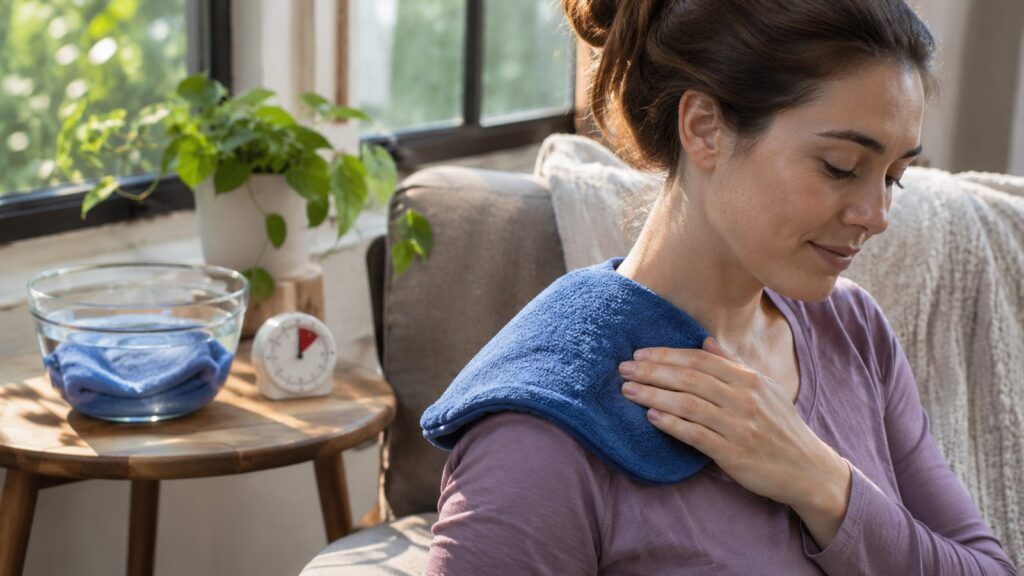
* Inspect the pad and power cord before use. * Choose a comfortable temperature rather than the highest setting. * Keep the treatment area dry unless the product specifically supports moisture. * Avoid folding electric products unless the manufacturer permits it. * Check your skin during treatment. * Stop if you notice burning, numbness, or unusual redness. * Never sleep while an active pad is warming your body.
Safe self-care is also important in workplaces where long sitting can contribute to stiffness. Clipaper’s guide to workplace health discusses broader wellness habits. Regular movement and ergonomic changes can address factors that heat alone cannot fix.
When Heat May Not Be Appropriate
Avoid applying heat directly to a fresh injury that remains swollen or hot. Heat can increase local circulation, which may be unhelpful during active swelling. Cold therapy is often preferred during that early stage. Extra caution is necessary when skin sensation is reduced. People with diabetic neuropathy may not notice excessive temperatures soon enough to prevent burns. MedlinePlus diabetes foot care guidance specifically warns people with diabetes against using heating pads or hot water on their feet. Open wounds and infected areas also require medical guidance. Do not use a warming device over damaged skin unless a clinician recommends it. Severe pain after trauma should be evaluated rather than repeatedly covered with heat. You should also avoid using heat while sleeping. A sleeping person may not notice increasing temperature or skin irritation. Prolonged contact can produce burns even when the device initially feels comfortable.
Choosing the Right Pad
Start with the body area you plan to treat. Large rectangular products work well across the back or thighs. Contoured products may sit more securely around the neck, shoulders, or knees. Temperature control is another useful feature. Multiple settings let you choose comfortable warmth without relying on one fixed temperature. Automatic shutoff can also reduce risk when attention drifts. Consider how the moisture is generated. Some products require a dampened insert, while others draw humidity from the surrounding air. Microwaveable packs can provide moist warmth without an electrical cord. A washable cover can make regular use easier. Check whether the cover is removable and whether the manufacturer allows machine washing. Always disconnect electrical components before cleaning.
Electric, Microwaveable, or Reusable Pack?
Electric models suit people who want adjustable settings and consistent warmth. They often include timers or automatic shutoff features. They still require careful placement and attention during use. Microwaveable packs offer portability and avoid electrical cords. Heating time must be measured carefully because microwave power varies. Always test the pack before placing it against sensitive skin. Reusable hydrocollator-style packs are common in physical therapy settings. They hold heat well but may require water heating and thicker protective layers. Home users should follow the manufacturer’s heating and wrapping instructions closely.
Can Moist Heat Replace Medical Treatment?
Heat can reduce symptoms without treating the cause. Muscle strain, arthritis, posture problems, nerve irritation, and other conditions can produce similar discomfort. Repeated pain deserves attention when the reason remains unclear. Contact a healthcare professional if pain is severe, worsening, or persistent. Seek care sooner when pain follows major trauma or accompanies weakness, numbness, fever, or significant swelling. These symptoms may need more than home heat therapy. Heat should be viewed as one part of self-care. Movement, appropriate exercise, sleep, and medical treatment may matter more for long-term improvement. The right combination depends on the condition causing the symptoms.
Frequently Asked Questions
Is a moist heat heating pad better than a dry one?
A moist heat heating pad may transfer warmth more efficiently because moisture conducts heat effectively. Some people also find the sensation more comfortable for stiff muscles. The better choice depends on comfort, convenience, and the condition being treated.
How long should I use moist heat?
Around 15 to 20 minutes is a common starting point for routine home heat therapy. Cleveland Clinic advises keeping many warming sessions under 20 minutes. Follow the manufacturer’s directions when your product gives a specific limit.
Can I use heat for a fresh muscle strain?
Cold is often preferred during the early stage when swelling is present. Heat may become more useful later when swelling decreases and stiffness remains. Medical advice is appropriate for severe injuries or uncertain symptoms.
Can I sleep on a heated pad?
No, sleeping with an active pad increases burn risk. You may remain exposed to heat longer than intended without noticing discomfort. Turn the device off before falling asleep.
Is moist heat useful for arthritis?
Heat can temporarily relax muscles and reduce stiffness around an arthritic joint. Cleveland Clinic includes warm baths, showers, and moist heat among common comfort measures. Your clinician can help choose heat or cold during painful flare-ups.
Who should be especially careful with heat?
Anyone with reduced temperature sensation needs additional caution. Diabetes-related nerve damage can make burns harder to notice. People with circulation problems or skin damage should also discuss heat use with a healthcare professional.
The Bottom Line
Moist heat can be a useful option for temporary relief from muscle tension, stiffness, and some ongoing aches. Its main advantage is efficient heat transfer rather than extreme temperature. Safe use matters more than choosing the hottest possible setting. Use comfortable warmth for a limited period and monitor your skin throughout treatment. Avoid fresh swelling, damaged skin, and sleeping with an active device. Ask a healthcare professional for help when pain persists or the cause is uncertain. —