
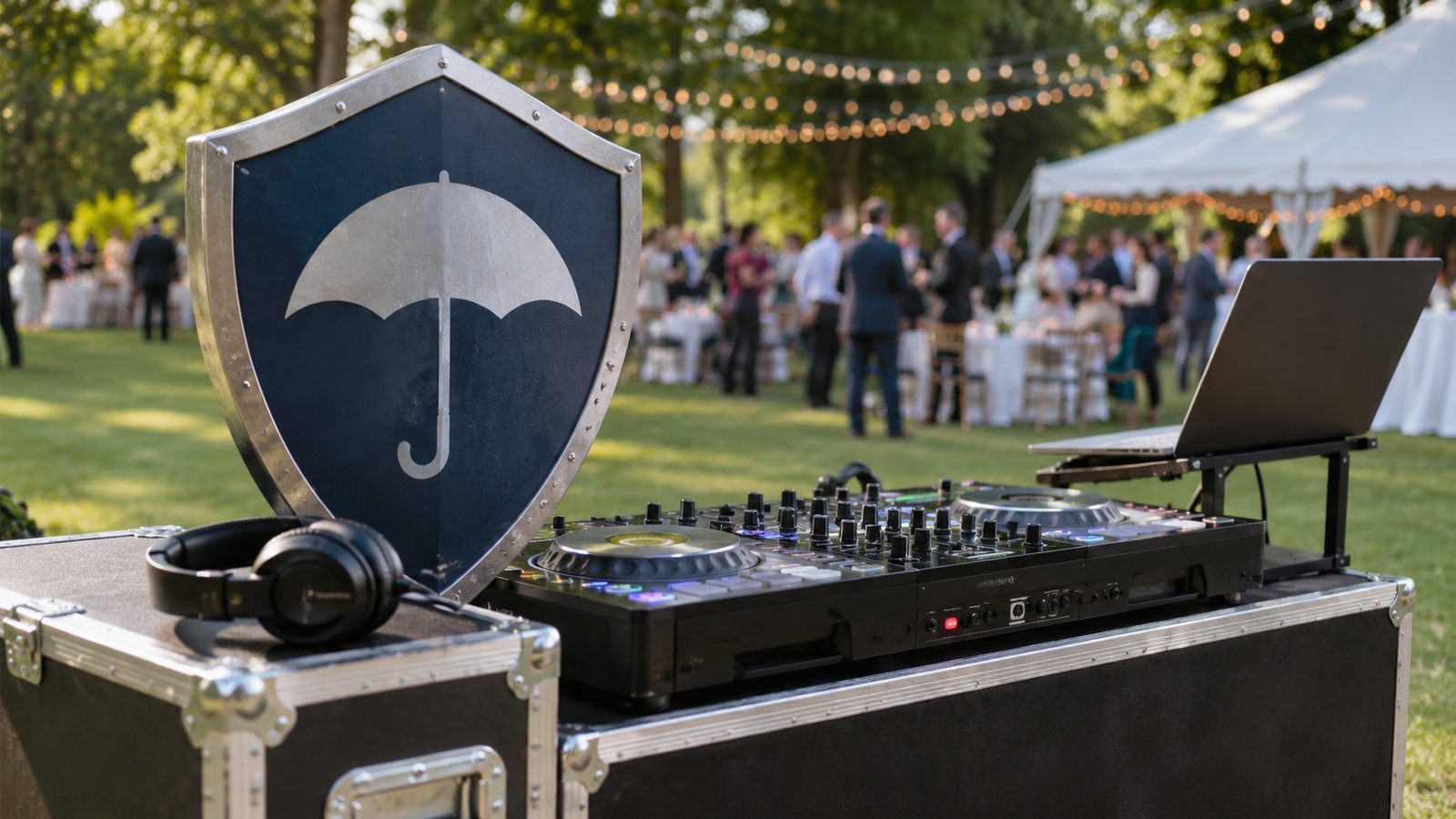
DJ business insurance helps protect working DJs from claims, damaged equipment, theft, and other costly problems. The right protection depends on your gigs, equipment, employees, vehicles, and venue contracts. For many U.S. DJs, general liability is the starting point, while equipment coverage fills another major gap. Direct answer: Most working DJs should consider general liability insurance first, especially when venues require proof of coverage. Equipment protection can cover valuable sound and lighting gear against covered losses. Professional liability, commercial auto, workers’ compensation, and cyber coverage may also matter depending on how the business operates.
| Key question | Practical answer |
|---|---|
| Main coverage to consider | General liability |
| Equipment protection | Commercial property or inland marine coverage |
| Venue requirement | Many venues may request a Certificate of Insurance |
| Employee coverage | Workers’ compensation requirements vary by state |
| Vehicle protection | Commercial auto may apply to business-owned vehicles |
| Typical buying options | Annual policies or short-term event coverage |
| Tax treatment | Qualifying business insurance premiums may be deductible |
| Best first step | Compare risks, limits, exclusions, and several quotes |
Key Takeaways
* General liability covers common third-party injury and property-damage risks. * Equipment often needs separate protection from a liability policy. * Venues may request a Certificate of Insurance before allowing setup. * A Business Owner’s Policy can combine several common protections. * Workers’ compensation rules depend on employees and state requirements. * Business vehicle use may need commercial auto insurance. * Annual coverage often suits frequent performers better than one-event policies. * Policy exclusions matter as much as premium prices.
What Does DJ Business Insurance Cover?
A DJ faces risks that do not exist in many home-based businesses. Guests can trip over cables, and speakers can damage property during setup. Expensive controllers, laptops, lights, and sound equipment can also be stolen or damaged. No single policy automatically covers every exposure. Instead, businesses usually combine several types of insurance based on their operations. The U.S. Small Business Administration recommends assessing risks before comparing policies and prices. Your needs can also change as the business grows. A solo wedding performer may require less protection than a company employing several entertainers. Clipaper’s broader Business section also covers planning considerations for growing businesses.
General Liability Insurance Is Usually the Starting Point
General liability insurance addresses common claims involving people or property outside your business. It can respond when a guest suffers a covered injury related to your setup. It may also cover damage to property belonging to a venue or client. Imagine that a guest trips over a secured audio cable and suffers an injury. Another example involves a speaker stand accidentally damaging an expensive venue fixture. These situations show why liability coverage matters even when you work carefully. The National Association of Insurance Commissioners explains that general liability can cover bodily injury and property-damage claims. Legal defense costs may also be covered under applicable policy terms. Exact protection still depends on exclusions, limits, and the issued contract.
Equipment Coverage Protects the Tools That Earn Your Income
General liability usually does not insure your own equipment against theft or accidental damage. DJs often carry thousands of dollars in speakers, computers, controllers, microphones, and lighting. Losing several essential items can immediately stop scheduled work. Commercial property coverage can protect qualifying business property against covered losses. Mobile businesses may also use inland marine coverage for equipment transported between locations. Ask specifically how the policy treats gear inside vehicles, temporary venues, and storage locations. Keep an updated equipment inventory with model numbers and purchase records. Photographs and receipts can also support documentation after a covered loss. Tracking these costs fits naturally into broader business budgeting and hidden operating expense planning.
Do DJs Need a Certificate of Insurance?
A Certificate of Insurance, commonly called a COI, summarizes important policy information. Event venues and planners may request one before your scheduled performance. They want evidence that your business carries specified insurance limits. A COI does not replace the actual insurance contract. It also does not automatically change your coverage or create new protections. Always review the underlying policy instead of relying only on the certificate. Some contracts may require a venue to appear as an additional insured. That requirement should be discussed with your insurer before the event. Waiting until setup day can create avoidable booking problems.
Should You Consider a Business Owner’s Policy?
A Business Owner’s Policy, or BOP, combines several common coverages into one package. The package commonly includes liability, property, and business income protection. Eligibility and included protections vary between insurers and business types. The NAIC explains that a BOP can simplify insurance buying for many small businesses. Business income coverage can help after qualifying property damage interrupts operations. It does not cover every reason a business might lose revenue. A BOP can be useful when you own substantial equipment and operate year-round. Still, compare its exclusions against separate policies before choosing it. You can also review Clipaper’s Finance section for broader financial planning topics.
Professional Liability Can Address Service-Related Claims
Professional liability insurance addresses certain allegations involving mistakes in professional services. For a DJ, a dispute might involve alleged errors connected with contracted services. Coverage depends heavily on policy wording and the specific claim. This protection differs from general liability insurance. General liability focuses more heavily on bodily injury and third-party property damage. Professional liability addresses certain financial losses linked to alleged service errors or negligence. Read your performance contracts alongside your insurance documents. Strong agreements can clarify responsibilities, cancellations, timing, and service expectations. Clipaper’s article on business strategy provides additional context for planning business operations.
Commercial Auto May Matter When You Transport Equipment
Many DJs regularly transport speakers, stands, lighting systems, and other equipment. Personal auto policies may not cover every type of commercial vehicle use. The answer depends on the policy, vehicle ownership, and business activity. A business-owned van will usually require different consideration than an occasional personal trip. Hired or non-owned vehicle coverage may also matter in some operations. Tell the insurance agent exactly how vehicles support your work. Do not assume equipment stored inside the vehicle receives automatic protection either. Vehicle insurance and equipment insurance address different exposures. Confirm both areas before transporting expensive gear to frequent events.
Workers’ Compensation Rules Depend on Your State
A solo operator without employees has different obligations from an entertainment company with staff. Workers’ compensation requirements vary by state and employment arrangement. State rules should therefore be checked when hiring workers. The SBA notes that legal insurance requirements can depend on location and employment circumstances. Businesses should review the rules in every state where obligations may arise. Independent contractor classifications also require careful handling under applicable laws. Do not choose worker classifications only to reduce insurance costs. Classification rules depend on actual working relationships and applicable law. Speak with qualified professionals when your staffing arrangement becomes complex.
Cyber Coverage Can Matter for Modern DJ Businesses
Many entertainers collect names, email addresses, contracts, and payment details online. Booking platforms and cloud storage can therefore create digital exposure. A compromised account can interrupt operations even without physical property damage. Cyber policies can address certain costs related to covered data incidents or cyber events. Coverage varies greatly between insurers, so definitions deserve close review. Good security practices still remain necessary even after purchasing insurance. Use strong passwords and multifactor authentication for critical accounts. Limit employee access to information they genuinely need. These basic controls can reduce the chance that one compromised login disrupts several systems.
How Much Does DJ Insurance Cost in the United States?
There is no universal premium because insurers price businesses individually. Location, revenue, claims history, coverage limits, equipment values, and employees can affect pricing. The number and type of events may also influence a quote. Published examples show how widely pricing can differ. The Hartford reports average small-business customer costs for several common coverages, rather than guaranteed DJ rates. Current specialist providers also advertise lower starting prices for certain limited DJ policies. For that reason, treat online prices as comparison points instead of promises. Request several quotes using the same limits and business information. Comparing identical coverage makes premium differences easier to understand. An unusually cheap policy can carry meaningful exclusions or lower limits. Focus on the financial exposure transferred by the policy, not only the monthly price. Broader planning can also include competitive business analysis when evaluating business costs.
Annual Coverage vs. One-Day Event Insurance
Short-term event coverage can suit someone who performs infrequently. It can provide specified protection for a limited event period. The policy still needs to satisfy the venue’s insurance requirements. Annual insurance may make more sense for DJs performing throughout the year. It avoids purchasing separate coverage before every qualifying booking. It can also make repeated COI requests easier to manage. Compare the total annual cost before deciding between both approaches. Include administrative convenience and coverage consistency in that comparison. A licensed agent can explain differences between available policy structures.
How to Choose the Right Policy
Start by listing the losses that could seriously hurt your business. Include liability claims, stolen equipment, contract disputes, vehicle incidents, and employee injuries. Then match each major exposure with an insurance option. Next, compare quotes using identical limits and deductibles. Read exclusions and endorsements instead of comparing only premium amounts. Confirm how the insurer handles additional insured requests and Certificates of Insurance. Finally, review coverage whenever your operations change. New employees, equipment, vehicles, or larger contracts can create different exposures. Insurance purchased years earlier may no longer fit the business you operate today.
Questions to Ask Before Buying
* What liability limits do my usual venues require? * Is my equipment covered while travelling between events? * Does theft from a vehicle have special conditions? * Can I obtain COIs quickly when venues request them? * What does adding an additional insured cost? * Does the policy cover subcontractors or assistants? * Are professional service disputes excluded? * Do I need hired or non-owned auto protection? * Which deductibles apply to equipment claims? * Are there exclusions for particular event types?
Are DJ Insurance Premiums Tax Deductible?
Qualifying insurance costs can often be deductible business expenses under federal tax rules. The IRS lists liability insurance and several other business-related premiums among generally deductible categories. Your specific tax treatment depends on the expense and business circumstances. The IRS small-business tax guide provides federal guidance concerning insurance expenses. State tax treatment and individual circumstances may differ. Keep invoices and payment records with your business accounting documents. Insurance decisions should not be based on a deduction alone. A deductible expense still costs your business money. Choose coverage because it addresses meaningful risk first.
Common Mistakes DJs Should Avoid
Buying liability insurance and assuming it protects every piece of equipment is a common mistake. Another problem is discovering a venue’s required limit shortly before the event. Both issues can create unnecessary costs or booking delays. Underinsuring expensive gear can also leave a significant replacement gap. Failing to report business vehicle use may create another problem after an accident. Accurate applications help insurers evaluate the exposure correctly. Do not leave policy review until a claim occurs. Read the declarations, exclusions, deductibles, and endorsements after receiving coverage. Ask questions whenever a provision is unclear.
FAQ About DJ Business Insurance
How much does DJ business insurance cost?
Pricing varies by insurer, location, revenue, limits, equipment values, and business operations. Published examples range considerably because policies contain different protections. The most reliable price comes from comparable quotes based on your actual business.
Do I legally need insurance to work as a DJ?
General liability is not universally mandated for every U.S. DJ. Venues or clients can still require it through their contracts. Employee-related insurance requirements also vary by state and business structure.
Does liability insurance cover DJ equipment?
General liability usually focuses on third-party bodily injury and property-damage claims. Your own equipment normally requires separate property or inland marine protection. Check the policy because covered causes and exclusions differ.
Can I buy DJ insurance for one event?
Some insurers offer short-term coverage for individual events or brief periods. This approach may suit occasional performers who do not need continuous coverage. Confirm that the limits satisfy your venue contract before purchasing it.
What insurance limits do venues usually request?
Requirements vary between venues, planners, and contracts. Many businesses commonly encounter million-dollar liability limits, but no single standard applies everywhere. Use the exact written requirement from each venue when arranging coverage.
Is an LLC enough protection without insurance?
An LLC can provide certain legal separation between business and personal assets. It does not pay covered claims like an insurance policy can. The SBA specifically notes that business structure protections have limits.
Protect the Business Behind Every Performance
Insurance cannot prevent a cable trip, theft, or damaged venue fixture. It can transfer part of the financial risk when a covered event occurs. That protection can matter when one claim would otherwise consume months of earnings. Start with the risks most likely to threaten your operation. Compare liability, equipment, vehicle, professional, and employee-related needs with a licensed insurance professional. Then review the policy whenever your gigs, gear, or business structure changes. A good policy should match the work you perform rather than a generic checklist. Ask for several comparable quotes and verify each venue’s requirements before booking. That approach helps protect both your equipment and the business built around it. —